🇳🇱 Dutch Content
by
Dr. Nardie Fanchamps (retired)
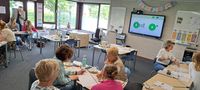
In this training, primary school teachers elabroated on possibile opportunities to implement as an educational programme (EP) by using the Co-design canvas. A method especially designed for the CoTEDI-project.
Read more
🇳🇱 Dutch Content
by
Dr. Nardie Fanchamps (retired)
Topic for the CoTEDI traning regarding how can artificial intelligence facilitate teaching and learning needs for pedagogical coaches and childcare workers.
[202501 Presentatie AI Pedagogiek KO 18 febr_BS1_NF_v2.pdf](https://github.com/user-attachments/files/22761436/202501.Presentatie.AI.Pedagogiek.KO.18.febr_BS1_NF_v2.pdf)
Read more
🇳🇱 Dutch Content
by
Dr. Nardie Fanchamps (retired)
Training for primary school teachers at CoTEDI school partner Swalm & Roer Netherlands to make them aware of the opportunities and possibilities that educational programmes (EPs) offer for implementation in education. In addition, there will be a presentation with a demonstration of how and in what ways social robotics can be used to support learning in the classroom.
Read more
The COTEDI
[AAATE Cyprus presentation Larissa Van der Leek.pdf](https://github.com/user-attachments/files/22760793/AAATE.Cyprus.presentation.Larissa.Van.der.Leek.pdf)
educational session explores the potential of emerging technologies to promote inclusion and participation in education. Using the World Café methodology, the session invites educators, technologists, researchers, and policymakers to engage in collaborative dialogue around three key questions:
Which educational technologies hold promise for promoting inclusion and participation? What are opportunities and good practices?
Which barriers and facilitators affect the implementation of educational technologies in the school context?
Which strategies may foster a successful implementation of educational technology into educational contexts?
Read more
Many children in special education show impairments in their psychological and socio-pedagogical
development. For example, children with intellectual disabilities often experience difficulties in multi-step problems. Previous literature suggests that digital technology-enhanced learning environments not only contribute to computational thinking but might also enhance aspects of psychological and socio-pedagogical development in children from special education. For example, CT-related interventions using educational robotics improved executive functions – particularly response inhibition – in children from special education. However, little is known about how these environments can contribute to the psychological and socio-pedagogical development of children in special educational contexts.
Read more