
Matatalab Robot Explores Geometry and Computational Thinking in 4th Grade
As part of the Erasmus+ CoTEDI project, the Universidad Rey Juan Carlos carried out a workshop in collaboration with Pedro Duque Elementary School aimed at developing computational thinking through geometry and mathematics. The session was conducted with 4th-grade students (9–10 years old), and the main tool used was the Matatalab Pro Set robot.
Matatalab Robot Explores Geometry and Computational Thinking in 4th Grade
Date: 07/05/2024
As part of the Erasmus+ CoTEDI project, the Universidad Rey Juan Carlos carried out a workshop in collaboration with Pedro Duque Elementary School aimed at developing computational thinking through geometry and mathematics. The session was conducted with 4th-grade students (9–10 years old), and the main tool used was the Matatalab Pro Set robot.
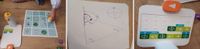
During the activity, children used the Matatalab robot to create geometric shapes and understand angles, rotations, and directions. In addition to fostering essential math skills, the workshop also strengthened key computational thinking abilities such as problem-solving, sequencing, and algorithmic reasoning.
Children worked collaboratively to design paths and commands, integrating concepts such as degrees, turns, and spatial orientation. This combination of robotics, geometry, and teamwork resulted in a highly engaging and educational experience.
This workshop highlights the powerful synergy between mathematics and computational thinking when supported by educational robotics, encouraging active learning and concept integration from an early age.